
Introduction
Light and sound are two of the most powerful environmental cues that influence our circadian rhythms. But what happens when they work together—or against each other? In this article, we explore the relationship between light exposure, sound stimulation, and the quality of your sleep.
Circadian Rhythms and Light
Our internal clock is primarily synced by light. Exposure to natural sunlight in the morning helps regulate melatonin production and signals to the brain that it’s time to wake up. On the flip side, exposure to blue light at night delays sleep onset and disrupts this hormonal balance.
The Role of Sound in Sleep Regulation
While light acts as a master reset button, sound plays a more subtle but equally important role. Rhythmic auditory stimuli, like those used in brainwave entrainment protocols, can encourage transitions into desired brain states—such as deep sleep or meditative calm—regardless of light conditions.
Combined Impact of Light and Sound
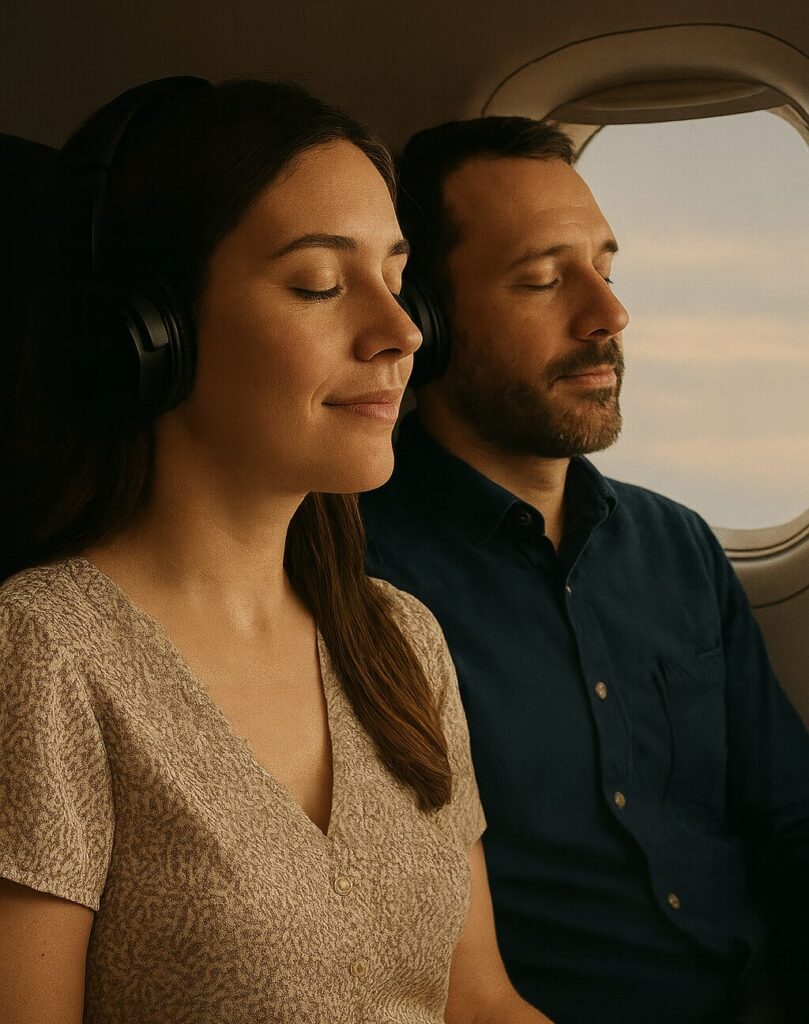
Recent studies show that carefully timed sound interventions can mitigate the negative effects of artificial light exposure. For example, listening to delta-wave audio can promote sleep even in environments with moderate light pollution, such as planes or hotel rooms.
Applications for Travelers
For travelers, this synergy becomes crucial. Exposure to a new light cycle can cause internal disorientation. SoundDrugStore’s protocols aim to restore alignment through targeted auditory cues, compensating for the delay in light-based adaptation.
Conclusion
Understanding how light and sound interact can enhance sleep hygiene and recovery from jet lag. Sound isn’t just an accessory—it’s a key to navigating time zone shifts and optimizing your circadian reset.
Explore SDS Protocols for Travel Recovery
SoundDrugStore – the Sound Pharmacy.